
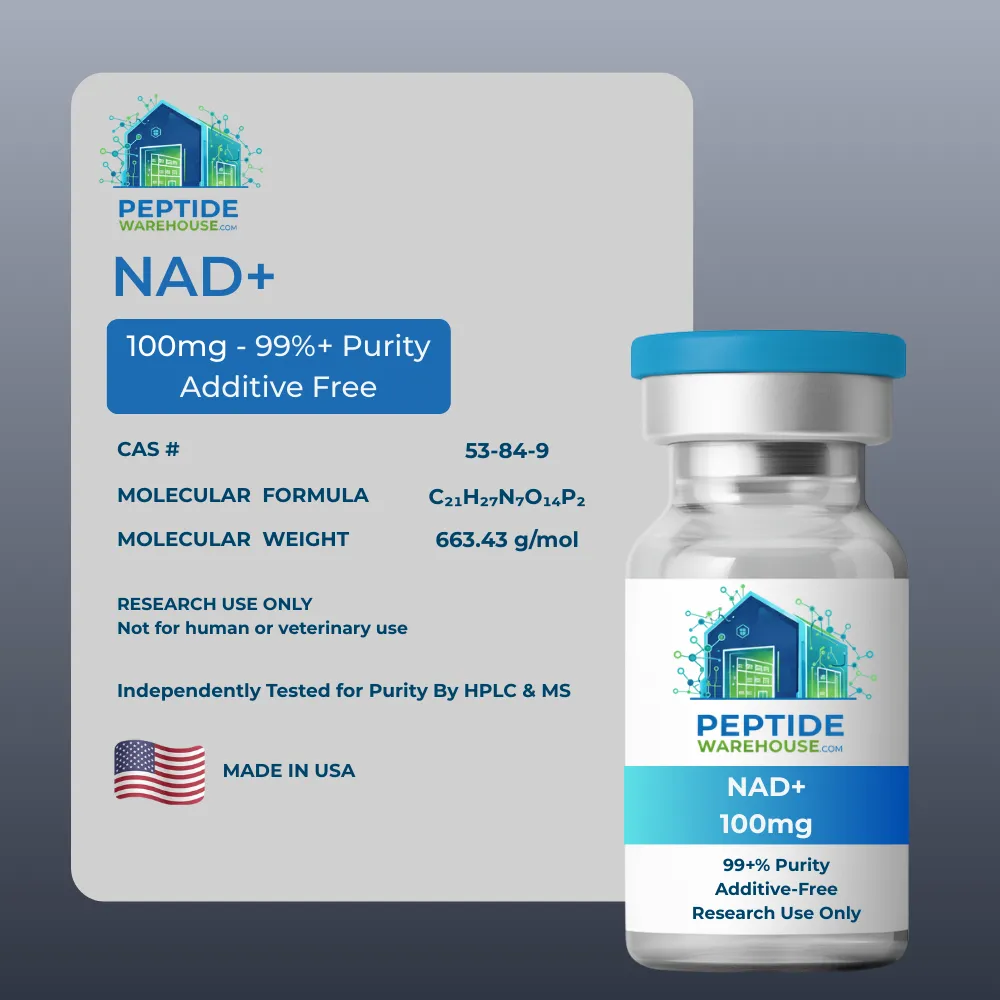
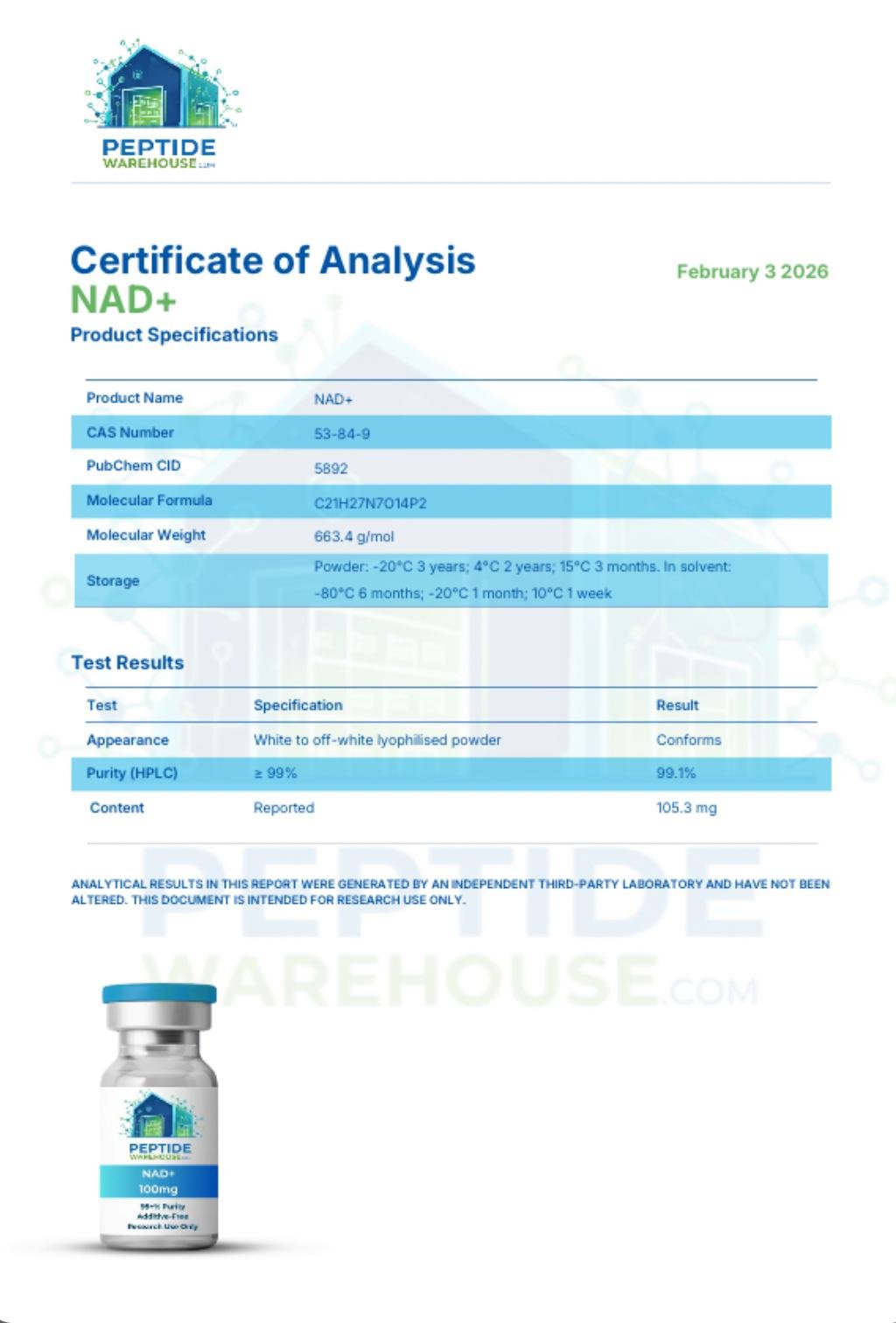

NAD⁺ – Research-Grade Nicotinamide Adenine Dinucleotide (Oxidized Form)
NAD⁺ (Nicotinamide Adenine Dinucleotide) is an essential dinucleotide coenzyme present in all living cells, composed of nicotinamide and adenine nucleotides linked through a pyrophosphate bridge. In its oxidized form, NAD⁺ plays a central role in cellular redox chemistry and enzymatic electron-transfer processes. In laboratory research settings, NAD⁺ is utilized as a reference material for studying metabolic pathway models, enzyme kinetics, and redox-dependent biochemical mechanisms.
Unlike peptides or protein-based signaling molecules, NAD⁺ is a small-molecule dinucleotide whose biochemical behavior is defined by reversible redox cycling rather than receptor-mediated interactions. This distinction makes it a valuable tool for investigating energy metabolism, cofactor-dependent enzymatic activity, and intracellular signaling processes associated with redox balance. Its defined chemical structure and stability support consistent use in mechanistic assays, metabolic studies, and exploratory biochemical research conducted under controlled laboratory conditions.
Be the first to review “NAD+”
Related products
Peptides
Peptides
Peptides
Peptides
Peptides
Peptides
Peptides
Reviews
There are no reviews yet.