
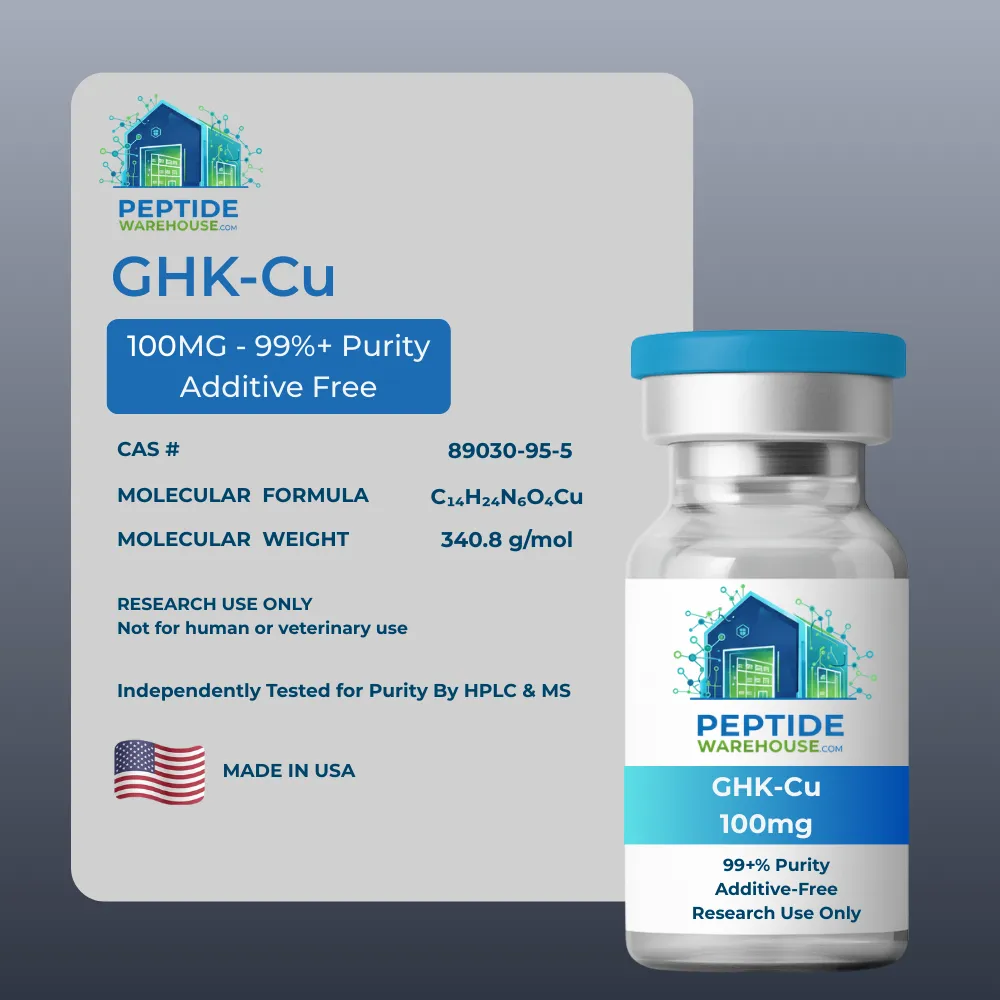
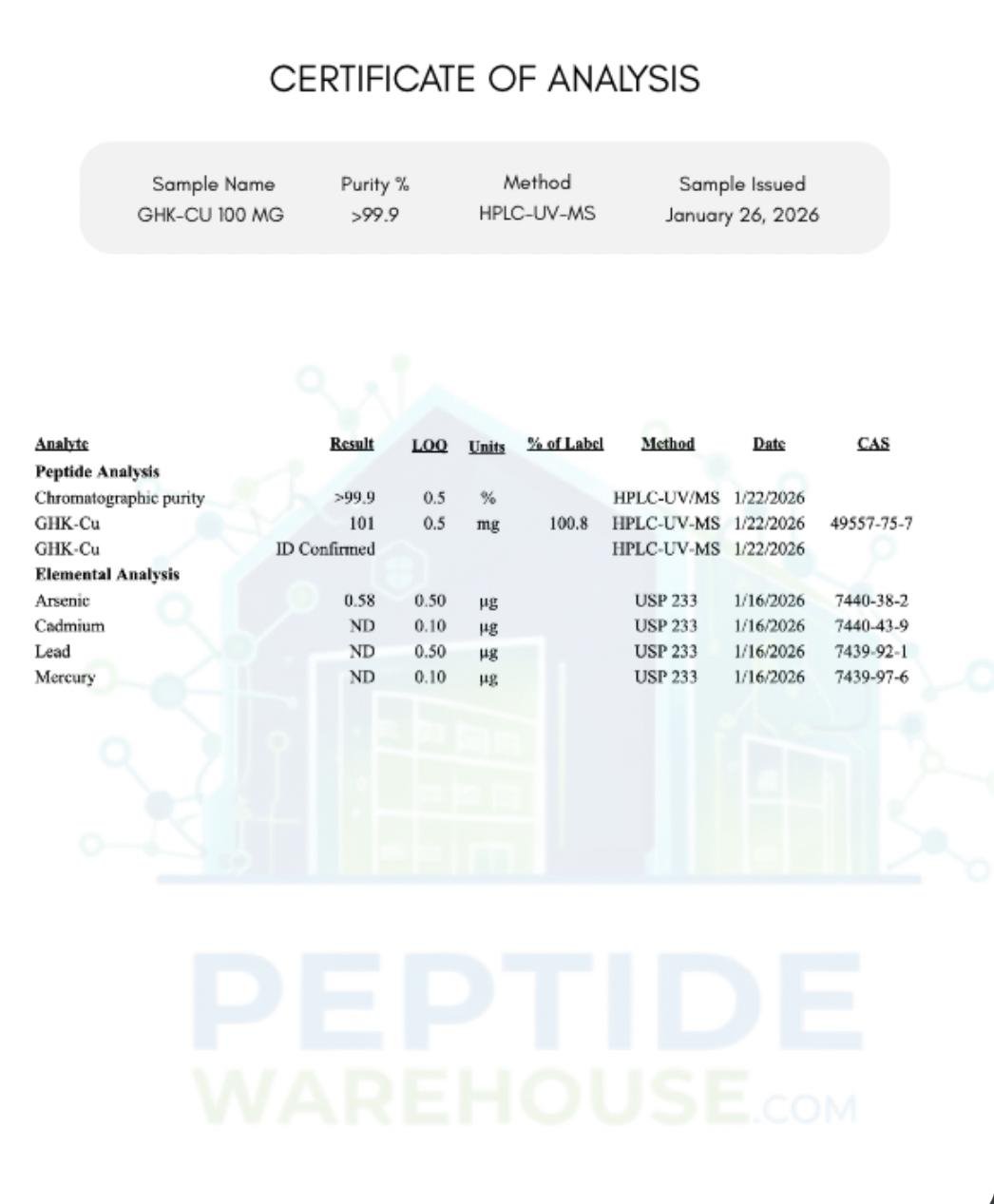

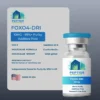
GHK-Cu – Research-Grade Copper Tripeptide Complex (Gly–His–Lys–Cu²⁺)
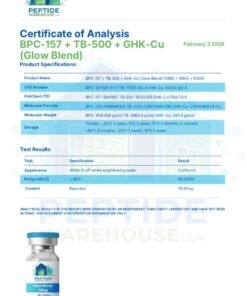
GHK-Cu, commonly referred to as copper tripeptide-1, is a coordination complex formed between the tripeptide sequence Gly–His–Lys (GHK) and a divalent copper ion (Cu²⁺). This compound has been extensively described in scientific literature as a structurally defined metal–peptide complex with physicochemical properties distinct from the unchelated GHK peptide. In controlled laboratory environments, GHK-Cu is utilized as a research material for studying metal–peptide coordination, copper-dependent biochemical interactions, and peptide-mediated signaling models.
Unlike simple peptide blends, GHK-Cu represents a single chelated molecular entity in which copper coordination influences conformation, stability, and analytical behavior. This characteristic makes it a useful tool for investigating metal-binding dynamics, peptide–metal complex formation, and downstream structure–function relationships in vitro. Its defined composition and consistent chelation profile support use in mechanistic assays, comparative metal–peptide studies, and exploratory biochemical research conducted under controlled laboratory conditions.
Be the first to review “GHK-Cu”
Related products
Peptides
Peptides
Peptides
Peptides
Peptides
Peptides
Peptides
Reviews
There are no reviews yet.